
The drive from Vancouver to Whistler along Highway 99 is one of the most famous road trips in Canada for a reason. In roughly two hours, the city skyline gives way to ocean views, waterfalls, granite cliffs, mountain lookouts, and eventually the alpine energy of Whistler. For travelers visiting British Columbia for the first time, the Sea-to-Sky Highway feels like a destination in itself, not just a route. That is exactly why it deserves a bit of planning.
This guide is built for visitors arriving at Vancouver Downtown or Vancouver Airport YVR who want to make the most of the journey. You will find route details, realistic timing, the best places to stop, seasonal driving tips, Whistler parking advice, vehicle recommendations, and ways to turn a simple transfer into a memorable mini road trip.
Why the Sea-to-Sky Drive Is So Popular
The Sea-to-Sky Highway connects Metro Vancouver to Squamish and Whistler, but what makes it special is how quickly the landscape changes. You start in an urban environment, cross into West Vancouver, follow the coastline of Howe Sound, climb into steep granite-and-forest scenery, and then enter the mountain corridor that leads into Whistler. It is a route that works for almost every type of traveler:
- Couples looking for a scenic weekend getaway
- Families heading to Whistler Village for skiing, biking, or summer activities
- Groups traveling with luggage, sports gear, or kids
- International visitors who want an iconic BC road trip without committing to a multi-day itinerary
If your trip starts at YVR, this drive is also one of the fastest ways to move from airport arrival mode into full vacation mode.
Distance, Drive Time, and What to Expect
The drive is roughly 120 kilometres / 75 miles, and the usual driving time is around 2 to 2.5 hours without major stops. That said, it is best to think about the journey in three timing scenarios:
- Direct drive: around 2 hours in light traffic
- Relaxed drive with 2–3 stops: around 3.5 to 5 hours
- Peak weekend / winter / heavy traffic: add extra buffer time
Traffic leaving Vancouver can be heavier on Friday afternoons, long weekends, holiday periods, and major ski weekends in winter. Summer weekends can also create congestion, especially when the weather is good and people are heading to hiking trails, campgrounds, or Whistler events.
Where to Start: Downtown Vancouver or YVR
If you are staying in the city first, picking up from Vancouver Downtown is often the easiest option. You can collect the car, load luggage once, and get moving without backtracking to the airport.
If you are landing and want to head north the same day, Vancouver Airport (YVR) is the better starting point. It saves a downtown transfer and gets you on the road faster, especially if Whistler is your main destination.
For either starting point, try to:
- Pick up your vehicle early in the day
- Confirm your luggage and passenger count before choosing a vehicle class
- Request seasonal tires if traveling in colder months
- Pack water, snacks, and layers, especially if you plan scenic stops
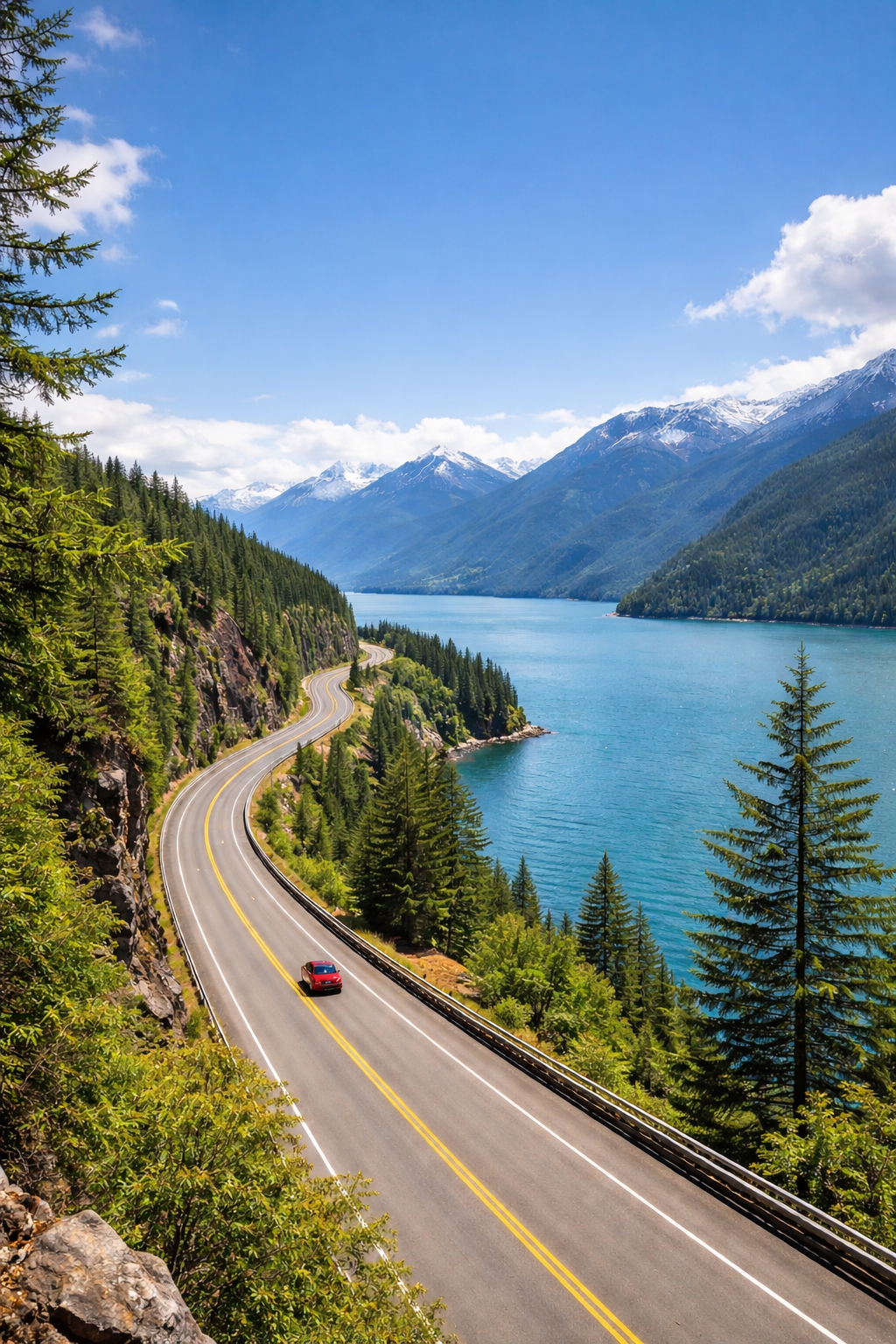
The Best Route: Highway 99 North
The classic route is simple:
Downtown Vancouver → Lions Gate Bridge → West Vancouver → Horseshoe Bay → Lions Bay → Britannia Beach → Squamish → Brandywine area → Whistler
From YVR, most drivers connect through Vancouver or Richmond before joining the northbound approach toward Lions Gate Bridge and the Sea-to-Sky corridor.
A few practical things to know:
- The route is well signed, but use GPS for live traffic updates
- Bridges and city entry points can slow down during rush hour
- The road is paved and maintained, but mountain weather changes quickly
- You should only stop in signed pullouts or official parking areas
Best Scenic Stops Between Vancouver and Whistler
One of the biggest mistakes visitors make is treating the drive like a straight transfer. Even if you only have time for two short stops, the route feels much richer.
- Prospect Point / Stanley Park area
If you are starting downtown and want a very quick opening stop, Prospect Point gives you an early view of the Lions Gate Bridge and harbor. It is not required, but it sets the tone nicely if you are easing into the trip. - Horseshoe Bay
A charming stop if you want coffee, washrooms, or a quick seaside break. It is especially useful if you left the airport and want to reset before the mountain section begins. - Porteau Cove
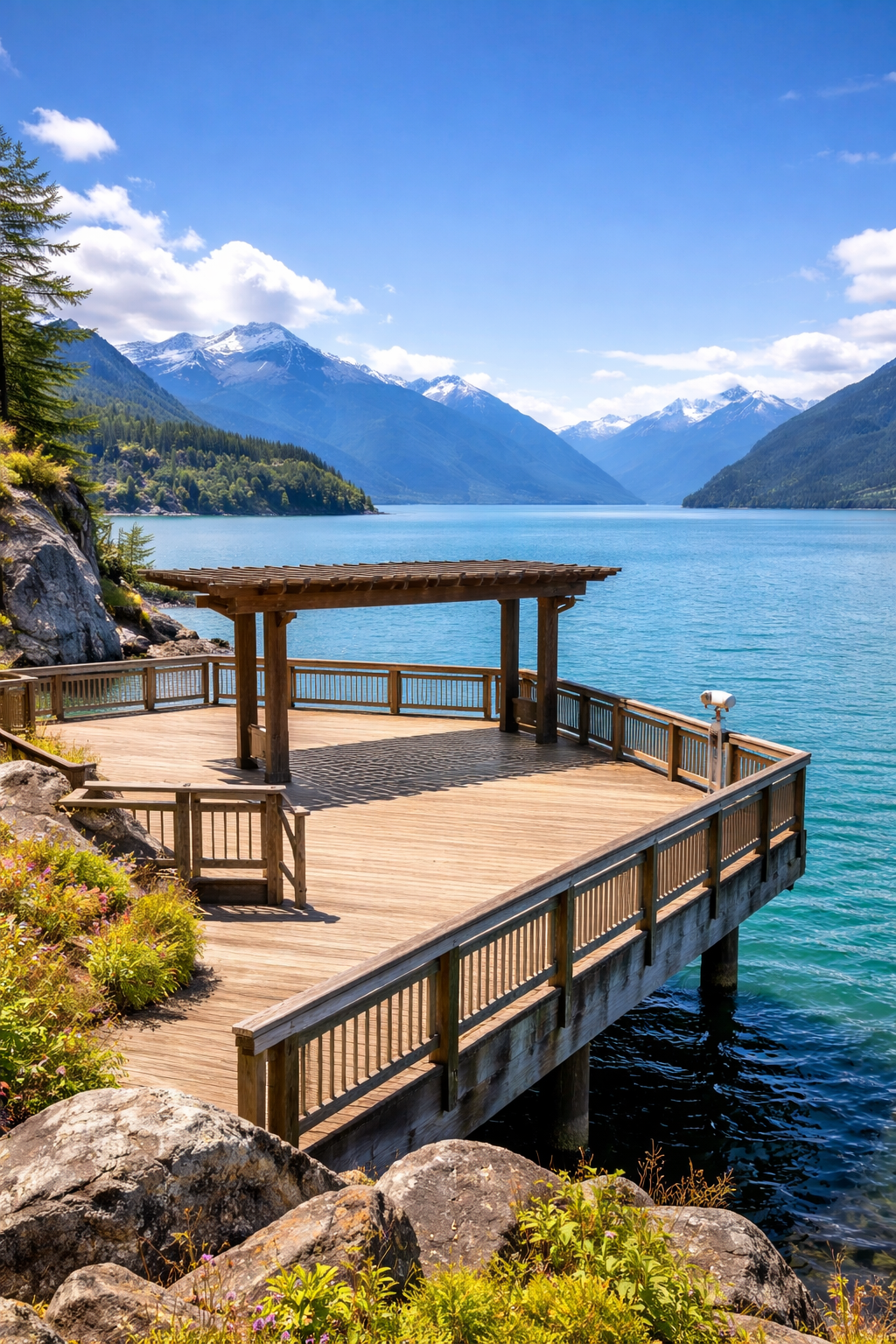
One of the most photogenic places on the route. The water, mountain backdrop, and open coastal feel make it a classic stop for photos. It works well as a 10–20 minute pause. - Britannia Mine Museum
Great for families or travelers who want a more substantial stop. It turns the drive into more of a day outing and adds a heritage angle. - Shannon Falls
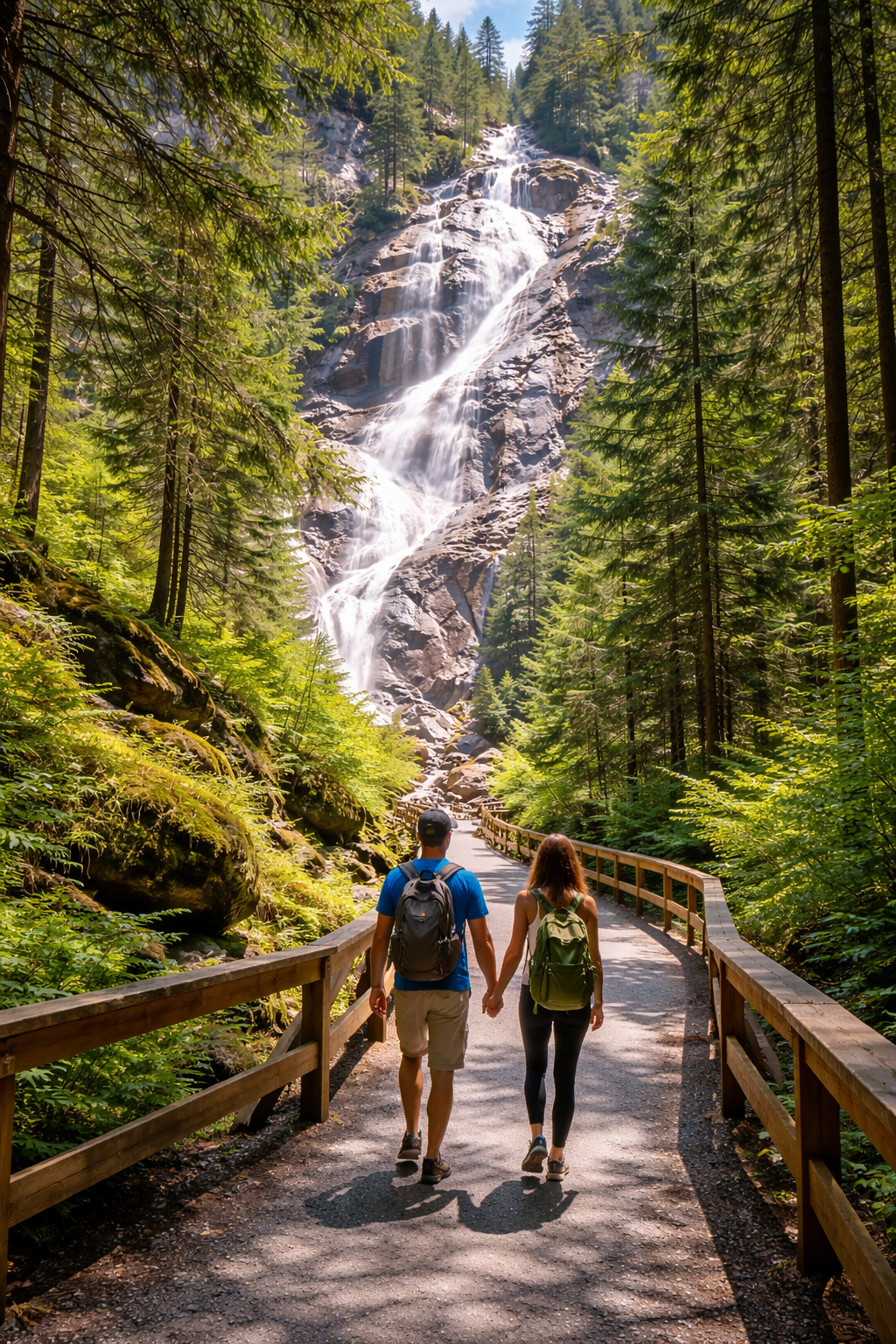
A high-value stop because the walk is short and the visual payoff is strong. It is ideal for people who want to stretch their legs without committing to a long hike. - Squamish
Squamish is one of the best mid-route bases for lunch, coffee, or a longer stop. It is worth considering if you want to break the drive in half. Popular nearby options include the Sea to Sky Gondola, downtown cafés, and walking areas. - Brandywine Falls
Closer to Whistler, but a strong option if you skipped earlier stops. It gives the trip a final “wow” moment before arrival.
How to Build Your Ideal Stop Strategy
Here are three simple versions of the trip:
- Fast scenic version: Porteau Cove + Shannon Falls
- Family version: Horseshoe Bay + Britannia Mine Museum + Squamish lunch stop
- Photo-focused version: Porteau Cove + Tantalus views near Squamish + Brandywine Falls
That kind of modular thinking helps you avoid overplanning. The route is better when it still feels easy.
Seasonal Driving Advice
Summer and shoulder season
Summer driving is generally straightforward, but traffic can be heavier. Construction, cyclists, hikers, and event traffic can all slow down the corridor. Start early when possible.
Winter driving
Winter is where preparation matters more. Snow, slush, freezing rain, or black ice can all affect parts of the route. Some designated BC highways require winter tires seasonally, so if you are driving to Whistler in late fall, winter, or early spring, request them in advance and confirm at pickup.
Winter basics:
- Leave extra stopping distance
- Reduce speed in poor visibility
- Avoid sudden braking or lane changes
- Check weather and road conditions before departure
- Carry gloves, a warm layer, and snacks in the car
If you are traveling with kids, older passengers, or bulky ski gear, an SUV rental often makes the experience more comfortable.
Choosing the Best Rental Vehicle for Vancouver to Whistler
Different trips call for different vehicles.
Economy or compact
Best for solo travelers or couples with light luggage in good weather. Easier parking and lower fuel use.
Intermediate or full-size
A good middle ground if you want more comfort without moving fully into SUV territory.
SUV
The best all-around option for mountain travel, winter conditions, family luggage, or outdoor gear.
Passenger van or minivan
Ideal for larger groups, ski trips, and family travel where comfort and cargo space matter.
You can compare options on our core fleet pages:
Frequently Asked Questions
Final Takeaway
The Sea-to-Sky is more than a route to Whistler. It is one of the best short scenic drives in Western Canada, and with the right vehicle and a loose stop plan, it becomes a highlight of the trip itself. Whether you want a quick airport-to-resort transfer or a more relaxed mountain road trip, a little planning goes a long way.
Start your drive from Vancouver Downtown or Vancouver Airport YVR and choose the right fit for your trip: SUVs, Passenger Vans, or Economy Cars.