
Winter travel in British Columbia and Alberta can be spectacular. Snow-covered mountain routes, ski towns, winter festivals, and quiet scenic highways are a major reason international visitors come to Western Canada. Winter also makes poor planning much less forgiving. A route that feels easy in summer can become slower and more demanding when temperatures fall, visibility changes, or road surfaces turn wet, slushy, snowy, or icy.
The good news is that winter driving does not need to feel intimidating. The greatest improvements come from a small number of sensible decisions: understand the type of route you will drive, choose an appropriate vehicle, confirm the tire setup, carry basic supplies, check current road conditions, and leave more time than you would in summer.
This guide is written for visitors renting from Vancouver Airport (YVR) or Vancouver Downtown. It covers city winter driving, regional highways, mountain routes, seasonal tires, vehicle selection, packing, black ice, visibility, and common mistakes.
Start by Defining Your Winter Trip
Not every winter rental needs the same preparation. A city-only stay is very different from a ski trip through a mountain corridor.
City winter driving includes airport transfers, downtown hotels, shopping, and local sightseeing. Typical challenges include slush, wet snow, icy intersections, reduced visibility, and parking lots where snow collects around curbs and ramps.
Regional highway driving includes routes such as Abbotsford to Harrison Hot Springs or Calgary to Drumheller. These trips may involve higher speeds, wind exposure, patchy freezing, and longer distances between ideal stops.
Mountain winter driving includes Vancouver to Whistler, Calgary to Banff, or travel through BC’s Interior. These routes require the most preparation because weather can change quickly, grades can be steeper, and snow can accumulate faster.
BC and Alberta Winters Are Different
Visitors sometimes imagine Canadian winter as one uniform condition. Western Canada has several distinct winter environments.
Vancouver and the Lower Mainland are often wetter than expected. Rain, slush, wet snow, and overnight freezing can create slippery bridges and shaded areas even when the city does not look deeply snow-covered.
The Fraser Valley, including Abbotsford, can be colder than central Vancouver and may experience frost, freezing fog, snow, or persistent icy sections.
Calgary can change quickly. A clear, dry morning may be followed by wind, falling temperatures, or snow later in the day. Roads may look bare while bridges and exposed areas remain slick.
Mountain corridors are the most variable. A route can begin on clear pavement and later encounter compact snow, blowing snow, fog, or reduced visibility.
Choosing the Right Vehicle
An economy or compact car can work well for urban stays, short distances, and moderate conditions. It is easy to park and economical, but cargo space may be limited if you are carrying bulky winter clothing.
A midsize or standard car offers more passenger room and a more relaxed highway experience while remaining manageable in city parkades.
An SUV is the strongest all-around choice for many winter travelers. The extra cargo room helps with ski equipment, boots, winter coats, strollers, and family luggage. Higher seating can improve visibility, although it does not remove the need for cautious driving.
A passenger van or minivan is useful for larger groups. Confirm the tire setup and make sure the vehicle is appropriate for the intended route. A large vehicle requires more space for braking and may be less convenient in tight parkades.
Tires Matter More Than Vehicle Size
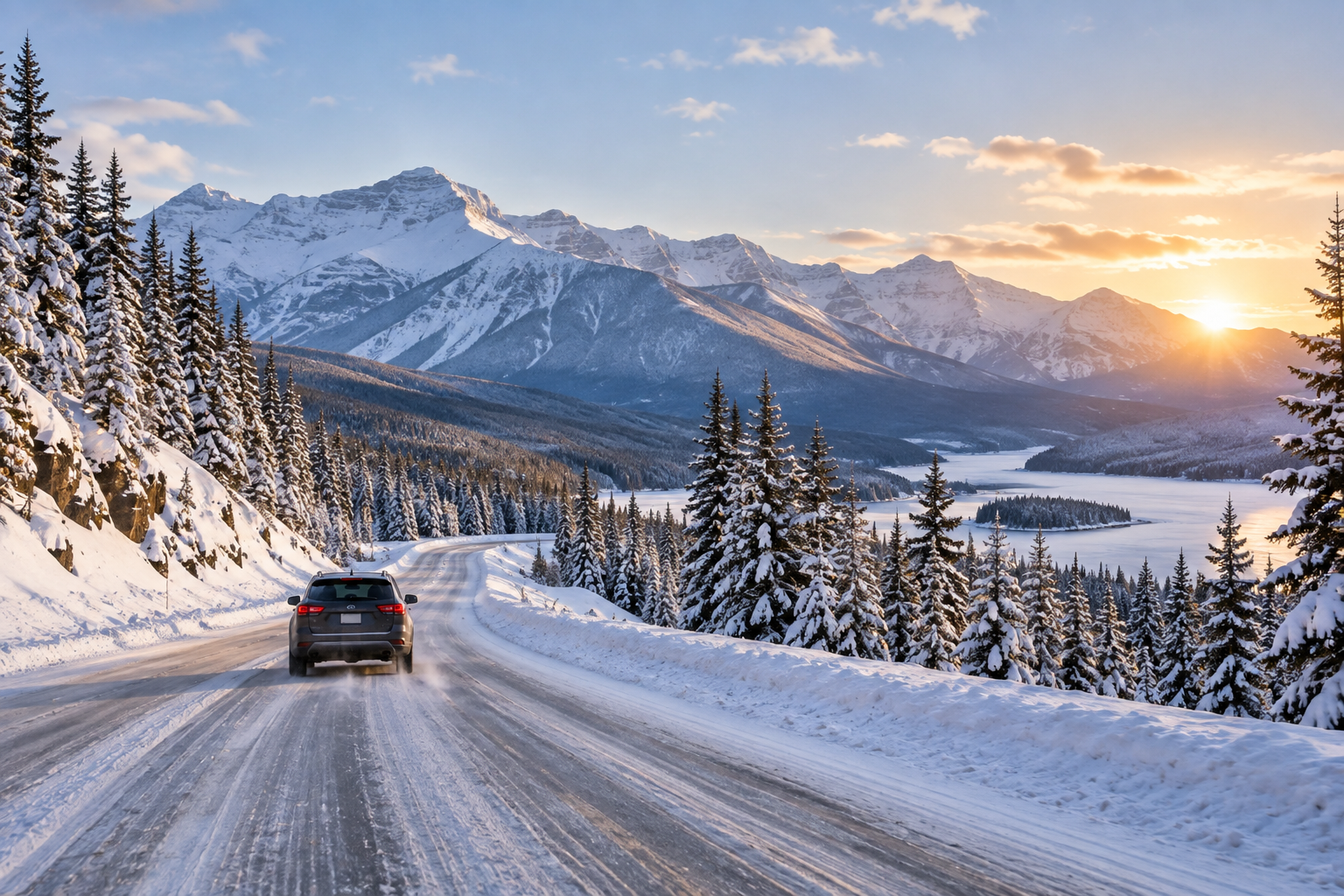
An SUV does not automatically make winter driving safe. Tire condition and driver behavior matter greatly. In British Columbia, seasonal winter tire requirements apply on many designated routes during colder months. Requirements vary by road and season, so travelers should check current official guidance for their route.
Ask about the tire setup when booking, especially if your trip includes Whistler, Interior BC, Banff, Canmore, Lake Louise, or other mountain destinations. Do not wait until pickup to discover that the vehicle class you wanted is no longer available with the configuration you prefer.
Winter Tires, M+S Tires, and AWD
Travelers often mix these concepts together. Winter tires are designed for cold temperatures and winter traction. M+S markings and mountain-snowflake symbols indicate different tire classifications. AWD can help a vehicle accelerate and maintain traction, but it does not shorten braking distance on ice. A careful driver in a properly equipped two-wheel-drive vehicle may be safer than an aggressive driver in an AWD SUV.
Because legal requirements and rental inventory can change, the best website content should explain the principles and tell customers to confirm the current tire setup for their exact booking.
Before You Start the Day
Check current weather, road conditions, and any active travel advisories. Look at the entire route, not only conditions at the departure point. Vancouver may be rainy while the Sea-to-Sky corridor is snowy. Calgary may be clear while conditions near Banff are deteriorating.
Clear all snow and ice from the windshield, mirrors, windows, lights, roof, and hood. Snow left on the roof can slide onto the windshield or blow onto vehicles behind you.
Set the navigation before moving, secure loose luggage, and avoid beginning a difficult winter route when you are already exhausted.
How to Drive on Snow and Ice
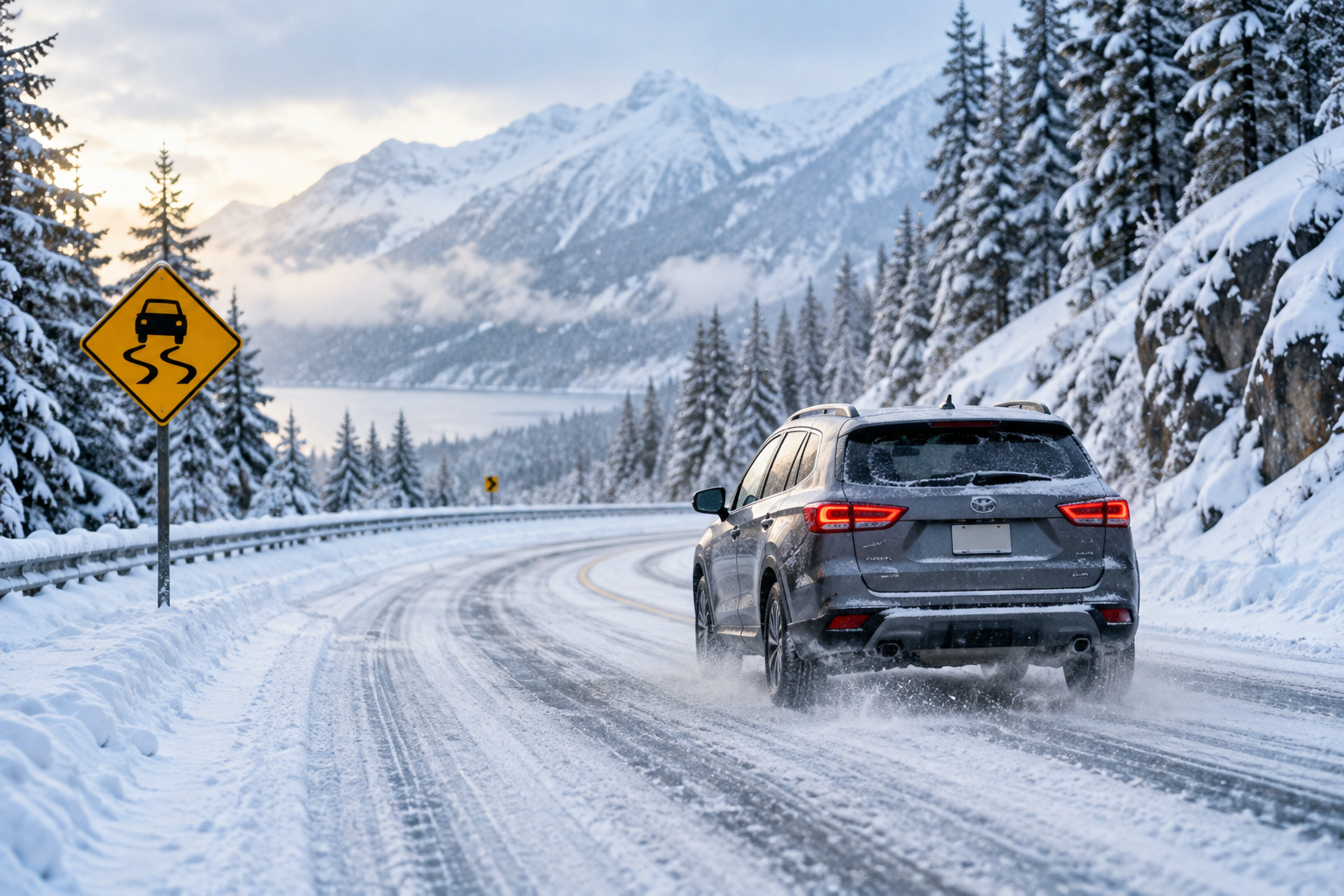
- Slow down before conditions become difficult. Winter driving is less about a specific speed and more about leaving enough time to react.
- Increase following distance. The space you use in dry weather is often insufficient on snow or ice.
- Brake early and smoothly. Abrupt braking can reduce control. If the vehicle has anti-lock brakes, apply firm, steady pressure during an emergency rather than pumping the pedal.
- Use gentle steering and acceleration. Sudden inputs make the vehicle more difficult to control.
- Be especially cautious on bridges, overpasses, shaded curves, and areas exposed to wind. These surfaces can freeze before nearby roads.
- Do not use cruise control on slippery roads. You want direct control over speed and acceleration.
Understanding Black Ice
Black ice is a thin, difficult-to-see layer of ice. It commonly forms during freeze-thaw cycles, on bridges, in shaded areas, and during early morning or evening temperature drops.
Warning signs include a road surface that suddenly appears darker or shinier, reduced spray from vehicles ahead, and temperatures near freezing. If you suspect ice, reduce speed gradually and avoid sharp braking or steering.
Visibility Can Be More Dangerous Than Snow Depth
Fog, heavy snow, blowing snow, and spray from other vehicles can reduce visibility quickly. Use appropriate headlights, keep the windshield clean, and increase following distance. If visibility becomes too poor, stop at a safe, designated location rather than continuing blindly.
Avoid stopping on the shoulder unless it is an emergency. In poor visibility, another driver may not see a stationary vehicle clearly.
Mountain Winter Driving
Mountain routes demand more planning. Travel during daylight when possible, keep the fuel tank comfortably above empty, and build time for changing conditions. Do not pass snowplows aggressively. They may be creating the safest available path.
On descents, reduce speed before the grade becomes steep. Avoid riding the brakes continuously. Use a lower gear when appropriate and maintain a wide safety margin.
City Winter Driving
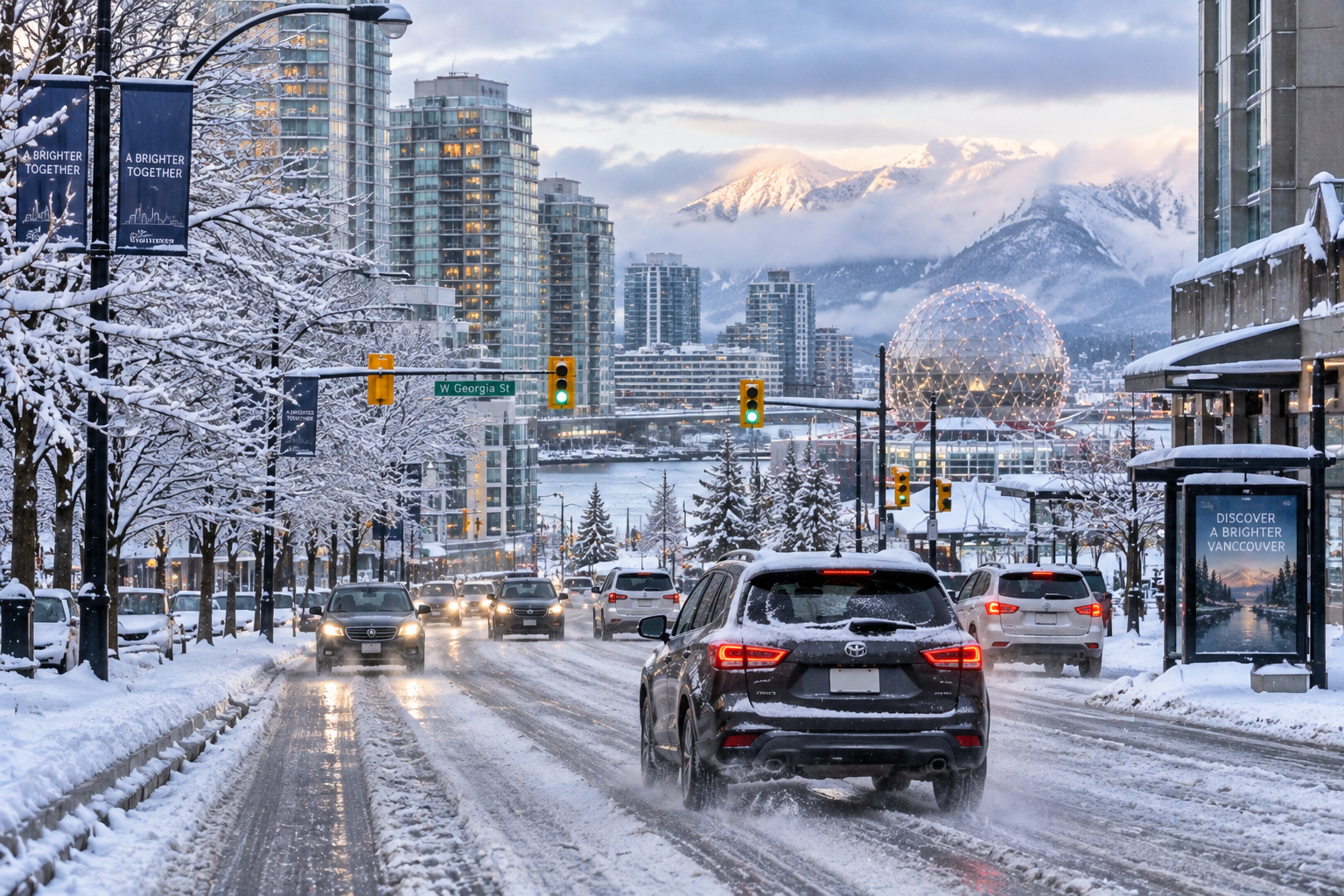
Urban winter driving involves frequent starts, stops, pedestrians, cyclists, buses, and parked vehicles. Intersections may become polished and slippery. Snowbanks can block sightlines and reduce lane width.
Approach turns slowly, watch for pedestrians stepping around snowbanks, and be patient in parking areas. Compact vehicles remain useful in the city, but an SUV may be more comfortable if you are carrying family luggage or continuing to the mountains.
YVR to Whistler
The Sea-to-Sky Highway can change rapidly in winter. Request a route-appropriate vehicle and seasonal tire setup. Leave Vancouver early, monitor conditions, and allow more time than summer estimates suggest. An SUV is often the most practical option for ski equipment and family luggage.
Winter Roadside Comfort
A small amount of preparation also improves ordinary comfort. Store wet gloves, hats, and boots so they do not interfere with the pedals. Keep windshield washer fluid above empty, use the climate controls to prevent fogging, and stop to clear ice rather than trying to see through a partially blocked windshield.
Even when no emergency occurs, winter delays can be tiring. Keep the cabin comfortable without overheating, avoid letting the fuel level become very low, and take breaks before fatigue builds. Children and older passengers may feel cold faster during stops, so keep accessible layers in the cabin rather than in the bottom of the luggage area.
Frequently Asked Questions
Final Takeaway
Winter driving in BC requires respect rather than fear. Match the vehicle to the trip, confirm the tire setup, check the whole route, carry practical supplies, and leave extra time. Choose an SUV for mountain and family travel, a midsize car for mixed use, or an economy car for city-focused trips in moderate conditions. The safest winter itinerary is the one that remains flexible.