
If you are landing at Vancouver International Airport and planning to drive into the city, the good news is that the trip is relatively easy. The better news is that with a bit of strategy, you can make it smoother, cheaper, and less stressful—especially if this is your first time driving in Vancouver.
This guide is designed for travelers picking up a vehicle from Vancouver Airport (YVR) and heading to downtown hotels, cruise departures, meetings, or the first stop of a larger BC road trip. We will cover the main route choices, realistic timing, what to know about downtown parking, how to think about vehicle size, and where to stop if you want to ease into the city rather than drive directly to your hotel.
How Long Does It Take from YVR to Downtown Vancouver?
On a typical day, the drive takes around 30 to 40 minutes. In heavier traffic, especially weekday late afternoons, it can stretch closer to 45–60 minutes.
Your timing depends on:
- The exact terminal pickup and departure time
- Bridge traffic
- Whether you are heading to Coal Harbour, Robson, Gastown, Yaletown, or the West End
- Any special events, cruise traffic, or game nights downtown
If you are arriving after a long flight, it helps to assume the slower end of the range so you are not rushed.
Why Rent at YVR Instead of Waiting Until Downtown?
If your trip includes Whistler, Vancouver Island, the Fraser Valley, or multiple hotel changes, picking up at YVR is often the easiest choice. It lets you:
- Avoid booking a separate transfer from the airport into the city
- Keep luggage loading to one step instead of two
- Head directly to your hotel or first stop
- Continue on to Whistler, ferries, or other regions without backtracking
If your plans are strictly urban and you will not need a car until later, Vancouver Downtown may be a better pickup option.
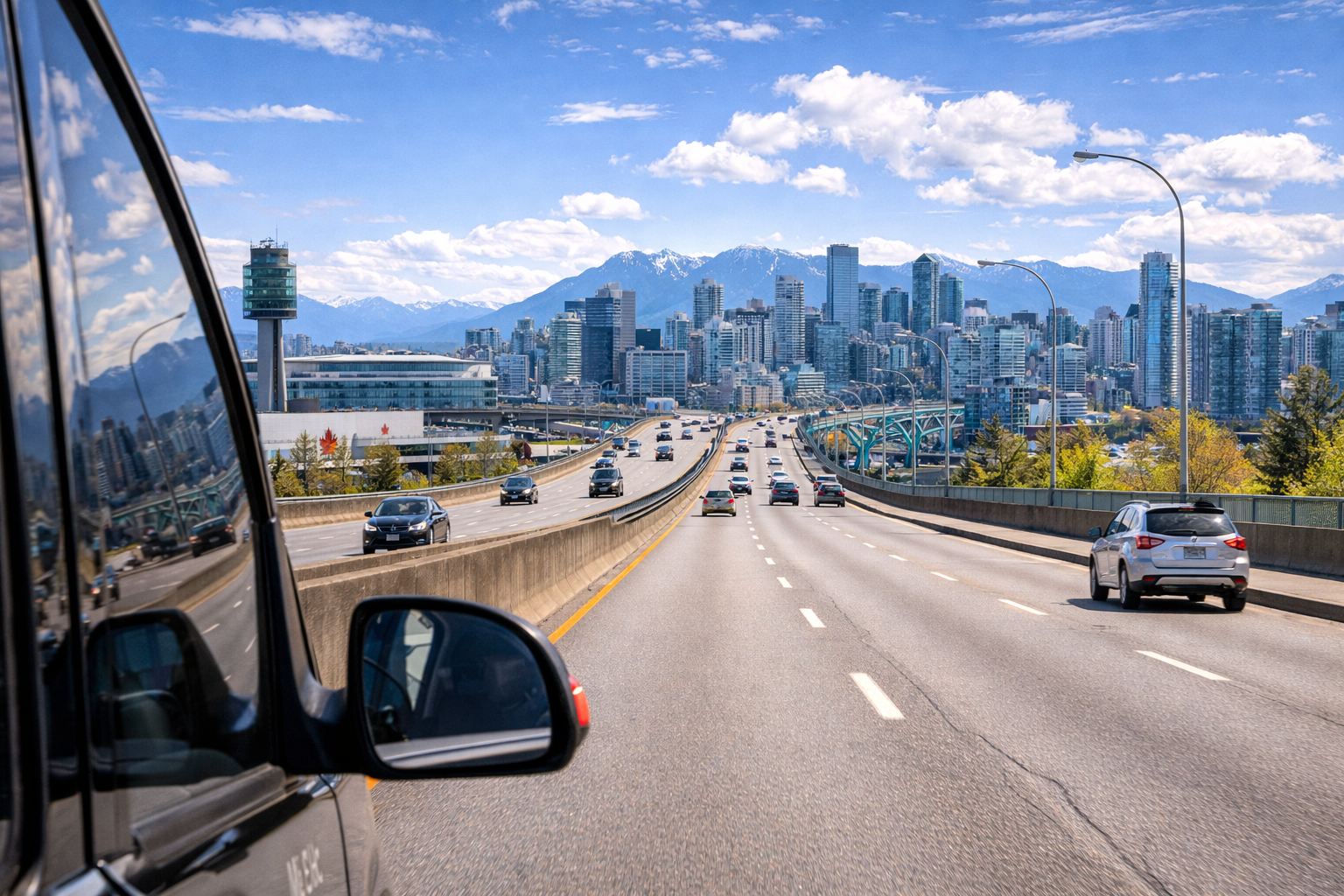
Main Route Options from YVR to Downtown
There is no single “perfect” route every time because traffic changes. Still, there are a few common patterns.
Route 1: Arthur Laing Bridge → Granville Street
This is one of the most common ways into downtown. It is straightforward and often a good balance between speed and simplicity.
Best for: Downtown core hotels, Robson area, Granville Street access, or Visitors who want a simple, intuitive route.
Route 2: Oak Street corridor
This route can make sense if you are heading toward the west side first, such as Kitsilano, South Granville, or a stop before entering downtown.
Best for: Granville Island area, West side hotels or appointments, or travelers who do not want to thread through the center immediately.
Route 3: Scenic/alternate approaches
Depending on traffic, GPS may route you along less direct but useful approaches that reduce congestion. This can help during peak periods.
Best for: Drivers following live traffic updates, or travelers comfortable trusting navigation rather than fixed route planning.
First-Time Driving Tips for Vancouver
Vancouver is generally a manageable city to drive in, but visitors notice a few patterns quickly:
- Downtown streets can feel narrower than expected
- Parkades often have tighter turns and lower clearances
- Some lanes are bus-only or restricted at certain hours
- One-way streets can confuse first-time visitors
- Pedestrian and cyclist activity is heavy in some neighborhoods
That is why smaller cars work especially well for city-first itineraries. If your trip starts in Vancouver but continues to Whistler, Victoria, or the Okanagan, you may still prefer an SUV or larger vehicle—just budget a bit more mental energy for downtown parking.
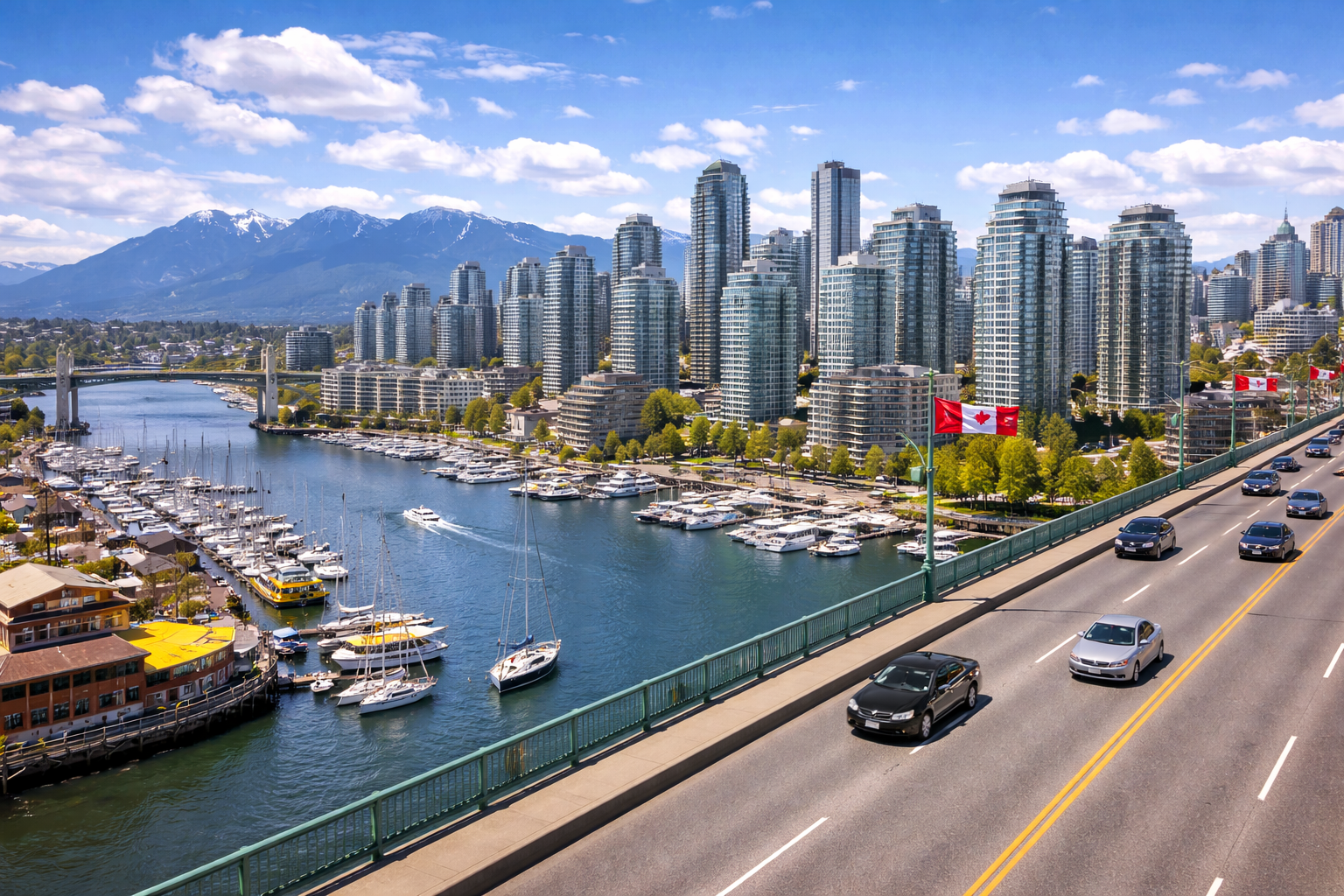
Downtown Parking: What Visitors Should Know
Hotel parkades
Usually the easiest for overnight stays. Ask your hotel:
- Is parking included or extra?
- Do they have clearance limits?
- Is in/out access allowed?
- Do they offer EV charging?
Public parkades
Very useful near shopping, restaurants, and sightseeing. These are often better than street parking for visitors who want multi-hour flexibility.
Street parking
Possible in some areas, but signage matters. Great for quick errands, less ideal for luggage-heavy arrivals.
Best Areas to Park Depending on Where You Are Staying
- Coal Harbour / waterfront: Often easiest with hotel parking or nearby structured lots.
- Robson / downtown retail core: Many public lots, but busy during shopping periods.
- Gastown: Can be trickier for curb access; structured parking is usually easier.
- Yaletown: Works well with hotel or condo-associated parking.
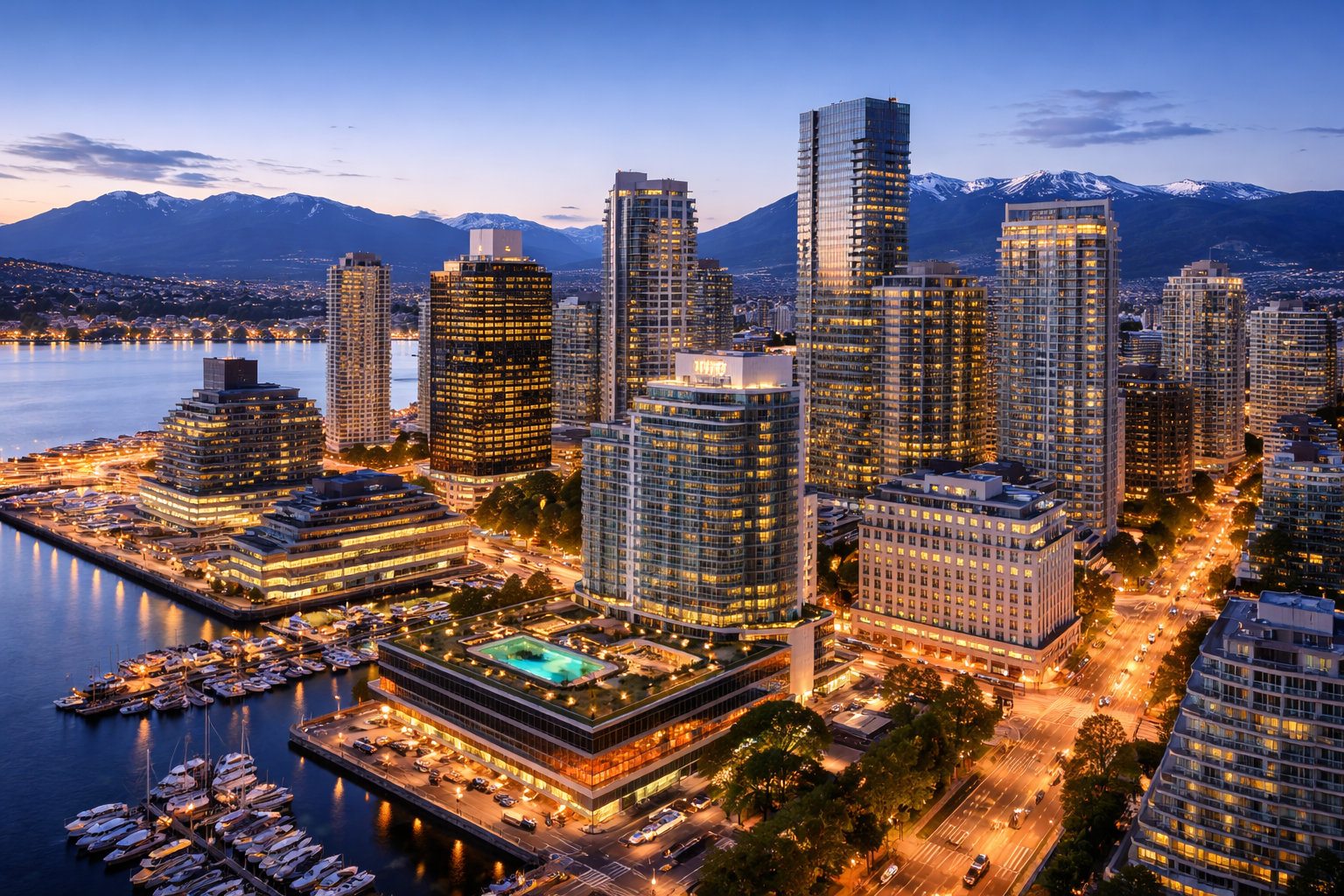
How to Build Your Ideal Stop Strategy
Here are three simple versions of the trip:
- Fast scenic version: Porteau Cove + Shannon Falls
- Family version: Horseshoe Bay + Britannia Mine Museum + Squamish lunch stop
- Photo-focused version: Porteau Cove + Tantalus views near Squamish + Brandywine Falls
That kind of modular thinking helps you avoid overplanning. The route is better when it still feels easy.
Seasonal Driving Advice
Summer and shoulder season
Summer driving is generally straightforward, but traffic can be heavier. Construction, cyclists, hikers, and event traffic can all slow down the corridor. Start early when possible.
Winter driving
Winter is where preparation matters more. Snow, slush, freezing rain, or black ice can all affect parts of the route. Some designated BC highways require winter tires seasonally, so if you are driving to Whistler in late fall, winter, or early spring, request them in advance and confirm at pickup.
Winter basics:
- Leave extra stopping distance
- Reduce speed in poor visibility
- Avoid sudden braking or lane changes
- Check weather and road conditions before departure
- Carry gloves, a warm layer, and snacks in the car
If you are traveling with kids, older passengers, or bulky ski gear, an SUV rental often makes the experience more comfortable.
If You Are Continuing Beyond Downtown
Plenty of travelers use downtown Vancouver as a first-night stop before heading elsewhere. Learn more about our other resources made available for you:
- Vancouver to Whistler guide
- Vancouver to Victoria ferry guide
- Winter driving guide
Frequently Asked Questions
Final Takeaway
Driving from YVR to downtown Vancouver is simple once you know what to expect. Think about your hotel location, parking situation, and whether the city is your whole trip or just your first stop. That small amount of planning will shape which vehicle you choose, when you leave the airport, and how smooth the arrival feels.
Reserve at Vancouver Airport (YVR), or if your trip starts later in the city, see Vancouver Downtown. Compare Economy and SUVs based on your route.